
Chevrolet Spark Owners Manual: Vehicle Identification Number (VIN)
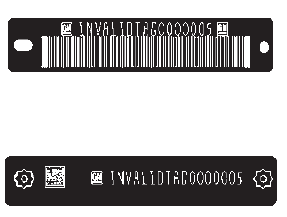
This legal identifier is in the front corner of the instrument panel, on the left side of the vehicle. It can be seen through the windshield from outside. The VIN also appears on the Vehicle Certification and Service Parts labels and certificates of title and registration.
Engine Identification
The eighth character in the VIN is the engine code. This code identifies the vehicle's engine, specifications, and replacement parts. See “Engine Specifications” under Capacities and Specifications on page 12-2 for the vehicle's engine code.

 Service Parts Identification Label
This label, on the inside of the glove box, has the following information:
Vehicle Identification Number (VIN).
Model designation.
Paint information.
Production options and special equipment ...
Other materials:
Recreational Vehicle Towing
Recreational vehicle towing refers to towing the vehicle behind another vehicle,
such as behind a motor home. The two most common types of recreational vehicle towing
are known as dinghy towing and dolly towing. Dinghy towing is towing the vehicle
with all four wheels on the ground. Dolly towi ...
How to Wear Safety Belts Properly
This section is only for people of adult size.
There are special things to know about safety belts and children. And there are
different rules for smaller children and infants. If a child will be riding in the
vehicle, see Older Children on page 3-32 or Infants and Young Children on page 3-34.
...
Passenger Sensing System
United States
Canada
The passenger sensing system turns off the front outboard passenger frontal airbag
and knee airbag under certain conditions. No other airbag is affected by the passenger
sensing system. See Passenger Sensing System on page 3-25 for important information.
The passe ...
